Why So Many Nonprofit Strategies Stall (and What Strategy Activation Can Fix)
Nonprofits rarely fail because their strategies are bad. More often, the strategies never really get a chance to work.
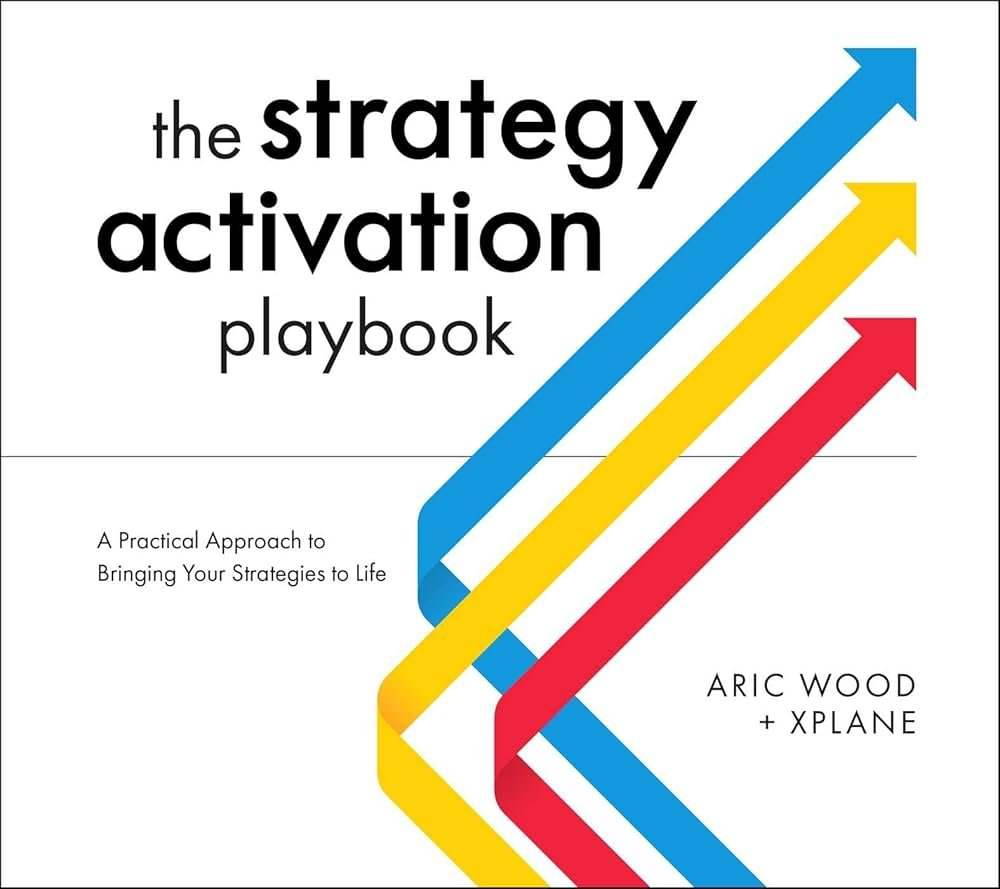
Aric Wood’s The Strategy Activation Playbook is essentially about that gap: the distance between a smart plan and a changed organization. For nonprofits, three failure points show up again and again:
Goals are vague or fuzzy
Momentum dies right after the planning retreat
Budgets and resource allocation never actually change
Here is how to look at each of those through a strategy activation lens.
1. Vague goals mean no one knows what “success” looks like
Many nonprofit strategies sound inspiring, but are not specific enough to drive decisions.
“Strengthen community partnerships.”
“Diversify revenue.”
“Center equity in our work.”
All good intentions, but unless you define what they actually mean, people are left guessing.
Strategy activation move: Turn aspirations into activation-ready goals.
Define clear outcomes
“Increase multi year contributed revenue by 20 percent over three years, with no single funder exceeding 25 percent of the budget.”
“Within two years, all programs will have co created outcome measures with community partners.”
Make it obvious who owns what
Name responsible leads for each goal.
Align individual work plans and performance conversations with strategic priorities.
Connect goals directly to daily choices
Use the strategy as a filter: “Does this project, hire, or partnership move one of our strategic goals forward, or is it a distraction?”
If people cannot see their fingerprints on the goals, the strategy will stay stuck at the leadership level.
2. Momentum dies after the planning process
You know the pattern. Big retreat. Sticky notes everywhere. Energy is high. Then everyone goes back to overflowing inboxes, and the beautiful strategic plan slowly becomes a PDF no one opens.
Wood’s core message: strategy is not a document, it is a behavior pattern you activate.
Strategy activation move: Treat implementation as its own project, not an afterthought.
Plan the “day after the retreat” before the retreat happens
Who is responsible for the first 90 days of activation work?
What meetings, communications, and early actions are already scheduled?
Build visible early wins into the plan
Choose 2 or 3 actions that can be done within 60 to 90 days and are clearly tied to the strategy
Celebrate these loudly, to show “this strategy is real”
Make strategy a standing agenda item
Every board and staff meeting should include:
“What did we do in the last period that advanced the strategy”
“What are the next actions”
Momentum is not a feeling, it is a rhythm of action and communication that you intentionally design.
3. Budgets never change, so nothing else does
This is where many nonprofit strategies quietly fail.
You set strategic priorities, then build a budget that mostly reflects last year plus or minus a bit. Programs that are no longer core still get funded. New priorities get “piloted” on the margins with short term funding. The spreadsheet tells the truth: strategy lost.
Strategy activation move: Use the budget as your most powerful activation tool.
Start with strategy, then build the budget around it
Fund strategic priorities first, then fit everything else around them
If something is not strategically important, it should not be protected in the budget by default
Make trade offs explicit
Instead of saying “We cannot afford that,” say “To fund this new strategic priority, what are we willing to reduce, stop, or redesign”
Engage board and staff in owning those choices, not just reacting to them
Align staffing and time with strategic focus
If a priority is “major donor growth,” but no one has meaningful time protected for relationship building, that is a misaligned resource allocation
Budget for training, systems, and support that make new ways of working possible
If the money and staff time do not move, the strategy will not move.
Bringing it together: Strategy as a living practice
The Strategy Activation Playbook is ultimately about shifting from “We have a plan” to “We live our plan.”
For nonprofits, that means:
Clear, concrete goals that guide everyday decisions
Deliberate momentum after the planning process, not a one time event
Resource allocation and budgeting that accurately reflect what you say matters most
When you tighten up these three areas, your strategic plan stops being an aspirational document and starts to function as a practical, shared roadmap. That is where strategies stop failing quietly and start unlocking the full potential of your mission.